
See. Know. Decide.
AWARESST is building an integrated Space Surveillance & Tracking capability from the UAE, connecting ground-based optical observation, orbital analysis and operational decision support.
About
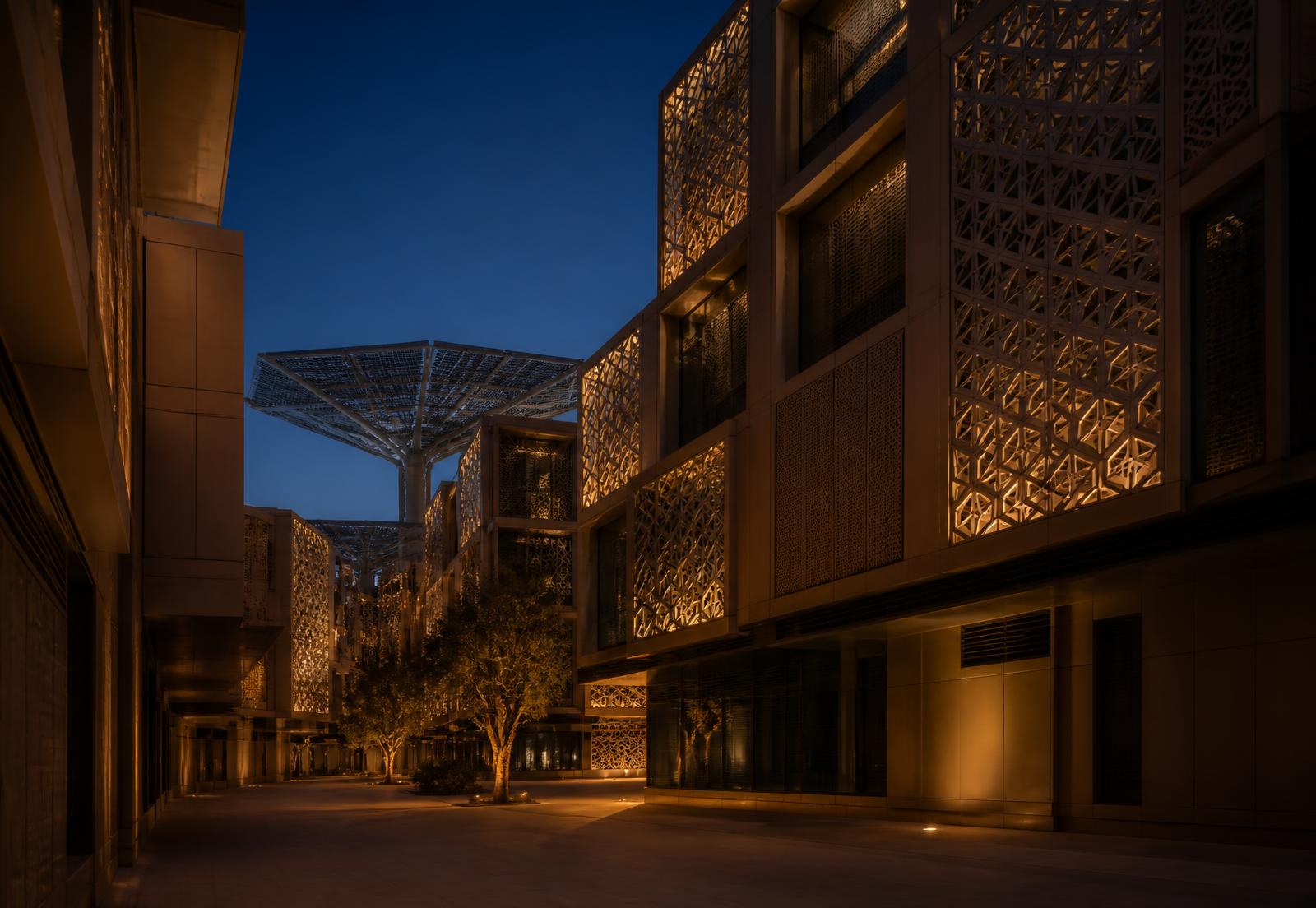
A UAE space technology company developing ground-based optical Space Surveillance & Tracking capability from Masdar City, Abu Dhabi.
An increasingly unforgiving orbital environment
Earth orbit is becoming more populated, more dynamic and more operationally consequential. Spacecraft manoeuvre, objects fragment and orbital states evolve continuously.
Propagation and orbital modelling remain essential, but propagated knowledge depends on the quality and recency of the observations behind it. A propagated orbit describes where an object is expected to be; observation tests that prediction against where the object is actually measured to be.
As orbital knowledge becomes stale and uncertainty grows, risk increases. Custody can be lost, conjunction assessments become less reliable, unnecessary or delayed manoeuvres become more likely, missions can be disrupted, and a collision or fragmentation event can create persistent debris risk for operators far beyond the original encounter.
Building the capability to see what is actually happening
Ground-based optical observation forms the foundation of AWARESST's current sensing strategy, with capability development progressing toward integrated optical observation infrastructure combining telescope systems, sensor control, acquisition, processing and orbital analysis.
Building the physical, digital and analytical layers required for sustained optical SST operations.
From observation to decision
AWARESST is developing an end-to-end observation-to-decision architecture spanning requirements, observation planning, sensing, measurement, orbital state refinement, propagation and prediction, custody, event and conjunction assessment, and decision support.
United Arab Emirates
Built in the UAE.
Technical capability, operational expertise, data systems and long-term Space Surveillance & Tracking capacity are being developed within the UAE space ecosystem.
The operational model is designed around geographically distributed observation. Depending on technical requirements, capability may incorporate directly developed infrastructure, hosted sensors, partner infrastructure and externally sourced observations.


What cannot be seen cannot be protected.
Continuous custody is what keeps an object observable, predictable and therefore protectable.
Offerings
AWARESST is building capability across the observation-to-decision chain, beginning with ground-based optical observation and extending progressively through orbital analysis, custody, prediction and decision support.
Optical Observation
Ground-based optical satellite tracking: tasked optical observations of resident space objects, survey and follow-up passes, astrometry and photometry.
The technical foundation of the capability.
- Tasked optical observations
- Survey and follow-up campaigns
- Astrometric and photometric measurements
- Custody maintenance passes
Orbit Determination
Satellite orbit determination and orbital state estimation from observed arcs.
State refinement, propagation and covariance analysis are used to understand not only the estimated orbit, but the confidence associated with it and how that confidence evolves between observations.
- Orbit determination from tasked arcs
- State propagation and covariance analysis
- Orbital uncertainty characterization
- Manoeuvre detection and verification
Conjunction Assessment Support
Support for satellite conjunction assessment workflows: close-approach analysis, collision-risk interpretation, CDM follow-up observation and post-manoeuvre reassessment.
The intent is to reduce uncertainty around consequential encounters, preserve decision margin and help distinguish events that require action from those that do not.
- Conjunction analysis and collision-risk support
- Conjunction Data Message (CDM) follow-up observation
- Follow-up tasking against screened events
- Post-manoeuvre risk re-assessment
Event Monitoring
Observation and analysis for when orbital behaviour diverges from predicted or catalogued states, including fragmentation events, re-entry, unexpected manoeuvres, uncooperative objects and other orbital anomalies.
- Re-entry monitoring
- Fragmentation-event observation support
- Space debris and orbital fragment monitoring
- Orbital anomaly investigation
Data Delivery
Standards-based SST data products designed to integrate into operator systems: CCSDS Tracking Data Messages, tracklets, astrometric and photometric measurements and orbital data products.
- CCSDS TDM generation
- Tracklets and astrometric measurements
- Photometric time series
- Orbital data products and data exchange
Sensor & Systems Integration
Optical station capability development spanning the observation stack: telescope systems, mounts and tracking control, imaging sensors and timing, acquisition and station control, processing pipelines and orbital-analysis workflows.
- Telescope systems, mounts and tracking control
- Imaging sensors, timing and acquisition
- Station control and sensor operations
- Processing pipelines and network integration
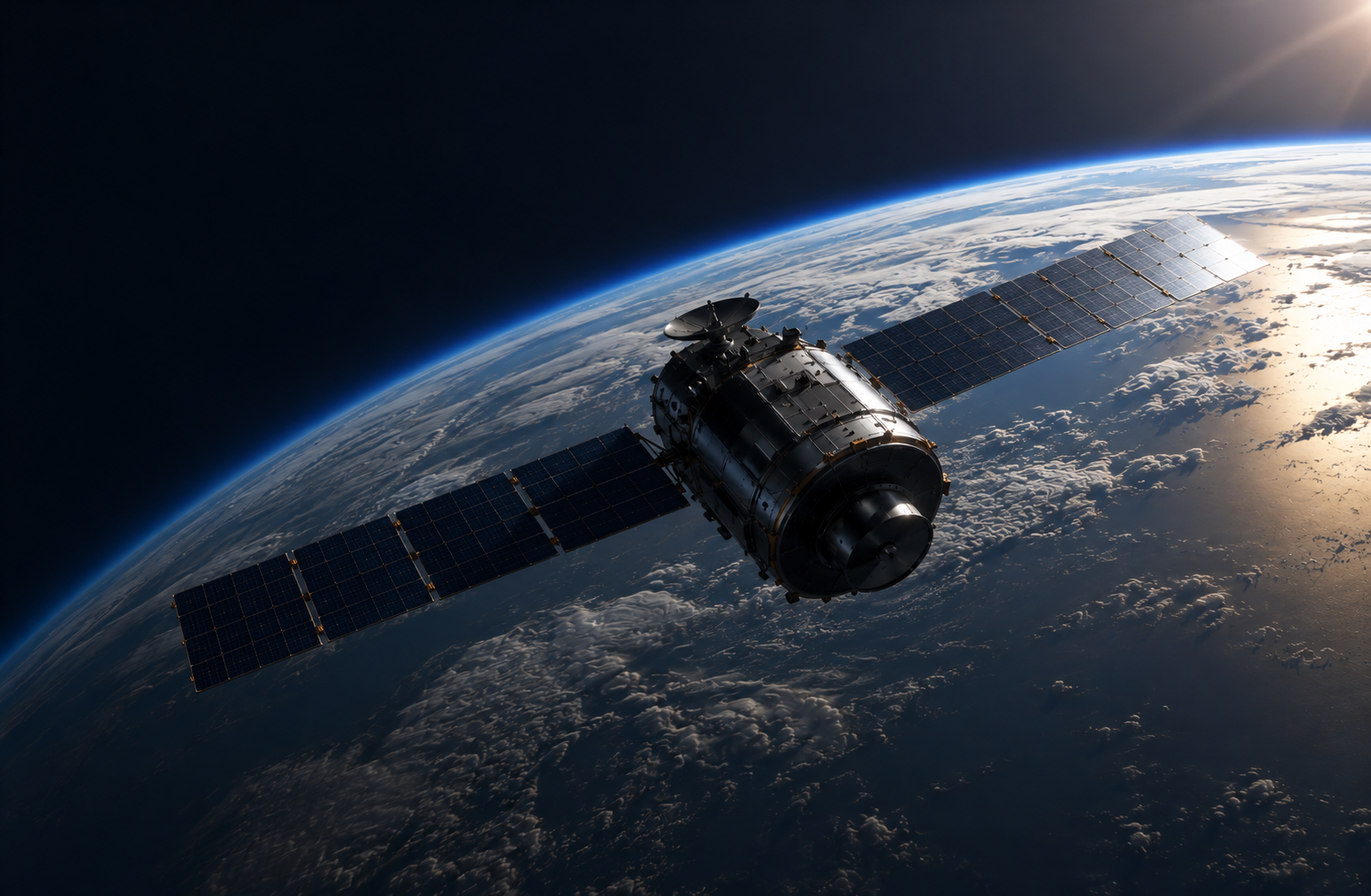
Shared orbital knowledge enables coordinated action.
Operators, agencies and regulators can coordinate effectively only when custody, conjunction understanding and decision support are grounded in a current and credible record of the orbital environment.
Better observation changes the outcome.
Explore a visual model showing how orbital knowledge changes the outcome of a conjunction.